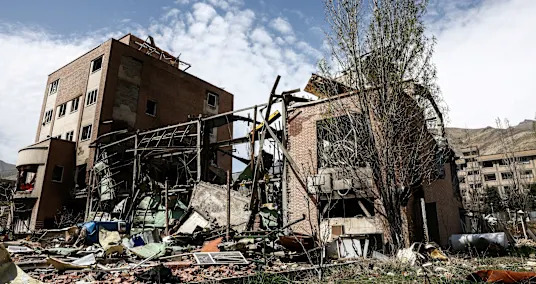
In Tehran, a city of nine million people, schools are closed, businesses are shuttered or struggling, and locals are living without a functioning air-raid warning system or public shelters. In many areas, the first sign of an incoming strike is the explosion itself.
There have been twice as many US and Israeli attacks on Iran compared to the number of Iranian retaliatory strikes since the war began — and the numbers killed in Iran have been orders of magnitude greater than in the neighboring Gulf states. A nationwide internet blackout, now entering its second month, has left civilians unable to access information about safety, shelter, and food and has meant some are unable to work. But while millions have fled Iran’s cities, many more are staying where they are. Some residents are hoping the US and Israeli bombs will cause the regime to collapse; others are left wondering if they are at risk if their neighbors are targeted.
For the many Iranians with ties to Dubai, there are other pressures, with Iranian nationals now barred from entering or transiting through the UAE. Residency permits, even for those with long-term Golden Visas, are reportedly being revoked without notice.

LATEST POSTS
- 1
 Creative Tech Contraptions That Will Work on Your Life
 - 2Brazil approves law strengthening protective measures for female victims of gender-based violence
- 3The Most Compelling Innovation Developments Somewhat recently
- 4Instructions to Pick the Right Dental Expert for Teeth Substitution
- 5Farewell, comet 3I/ATLAS! Interstellar visitor heads for the outer solar system after its closest approach to Earth


- Rediscovering Experience Through Excursions: Individual Travel Stories
- Kate Hudson, 46, says she doesn't need long workouts to feel good
- Figure out how to Put resources into Lab Precious stones: A Novice's Aide
- Farmers call for French blockades over cow disease cull
- Bring tissues and skip the mascara: The movie that's making theater-goers sob uncontrollaby
- How will the universe end?
- Medtronic has 'significant firepower' for multiple acquisitions, executives say
- Boats escort freed whale away from shallow waters off German coast
- French rapper Gims placed under investigation for 'aggravated money laundering'