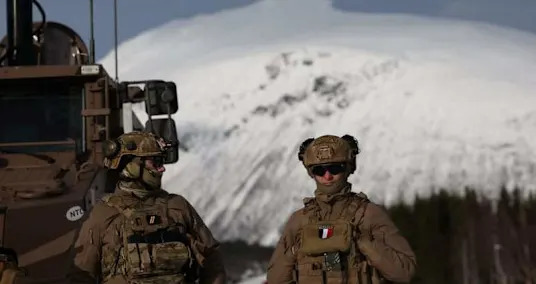
Sources told The Jerusalem Post that the decision was a result of France taking a hostile attitude toward Israel over the last two years.
Israel has halted selling defense products to France, three senior Israeli sources confirmed to The Jerusalem Post on Tuesday.
Defense Minister Israel Katz formally ordered the halt, but a decision of such significance could only happen if it was a priority of Prime Minister Benjamin Netanyahu.
Sources told the Post that the decision was a result of France taking a hostile attitude toward Israel over the last two years, forcing it to reevaluate how much it could trust sharing its defense products with the country.
It was unclear exactly how the decision would impact the countries, given that France has been boycotting Israeli weapons since mid-way through the Israel-Hamas War in Gaza, and given that a source clarified that existing contracts would be honored and private companies could still make deals.
Israel may still purchase defense products from France
While economic ties between the two nations remain intact, defense cooperation has cooled significantly. Also, Israel may still purchase defense products from France if Paris is open to that, though this has also been reduced in recent years.

However, for larger deals requiring government-to-government involvement, and even for Israeli products that have only defensive characteristics, France may lose significant opportunities.
Germany and other NATO countries have been jumping to purchase Israeli air defense and other systems in response to new threats posed by Russia since Moscow began its still ongoing war to try to take over Ukraine in 2022.
Some of the major points of friction between Israel and France have been over Paris's push to end the Gaza war prior to a point where Israel's government believed it could bring Israeli hostages home and keep Hamas down as a future threat.
France led a wave of countries recognizing a Palestinian state in September 2025, viewed in Jerusalem as a penalty for continuing the war.
In addition, France has pressured Israel to reduce its attacks on Hezbollah during the 2023-2024 conflict, while full hostilities were reduced but not gone in 2024, and during the current conflict.
Despite the disagreements, France helped defend Israel from Iranian missiles and drones in 2024, and the countries are still cooperating in various intelligence and other capacities. For example, France helped snap back global nuclear sanctions on Iran in the summer of 2025.
Nevertheless, President Emmanuel Macron halted the flow of French weaponry to Israel in late 2024, citing the humanitarian toll of the war in Gaza and for the past two years has blocked Israeli defense companies from exhibiting at arms fairs in the country.
Anna Ahronheim contributed to the report
LATEST POSTS
- 1
 ‘I love this work, but it’s killing me’: The unique toll of being a spiritual leader today
 - 2Shas threatens to oppose 2026 state budget over haredi food-voucher exclusion
- 3Higher cost, worse coverage: Affordable Care Act enrollees say expiring subsidies will hit them hard
- 4A Gustav Klimt painting is now the most expensive piece of modern art sold at auction. The fascinating history behind the $236 million 'Portrait of Elisabeth Lederer.'
- 5Australia PM tries to reassure public as panic buying sees fuel demand surge 400% in some regions


- Africa's energy giants eye long-term gains on Iran war disruption
- Understanding Preschool Projects: An Extensive Aide
- Misjudged Objections For Solo Voyagers
- Kendall Jenner addresses long-standing rumor about her sexuality
- IDF carried out mission to locate former hostage Avera Mengistu a day before Oct. 7
- The most effective method to Alter Your Kona SUV for Greatest Solace and Comfort
- Unwinding the Starting points of America: An Excursion Through History
- Oil, energy and food: Which countries in Europe are most exposed to higher food prices?
- Thousands of ultra-orthodox protest in Jerusalem against conscription