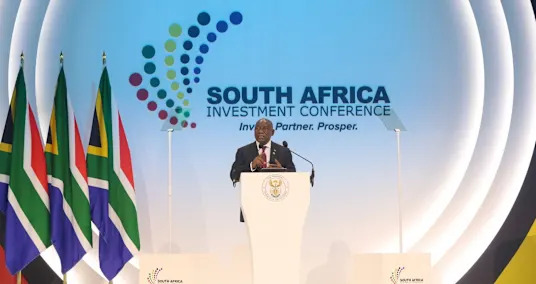
South African President Cyril Ramaphosa launched a nearly $200 billion investment drive aimed at accelerating economic recovery and industrialization in the face of growing worry over the impact of the Iran war on the continent’s biggest economy.
For more than a decade, South Africa’s economy has barely grown, leaving it with crumbling infrastructure and the need to create jobs in a country where one in three people are unemployed. Ramaphosa’s pitch to investors in Johannesburg this week was that South Africa has fixed the worst bottlenecks: He said the country is opening key sectors to private capital and is ready for large scale investments.
Ramaphosa said the effort will run through 2030 with delegates at the South African Investment Conference pledging $53 billion across 31 projects spanning energy, logistics, manufacturing, and digital infrastructure. They include Coca-Cola’s $1 billion expansion plan, and a $3.6 billion commitment from Sasol — the world’s biggest maker of fuel from coal — to upgrade operations.
LATEST POSTS
- 1
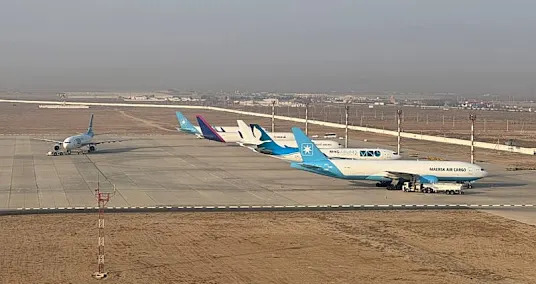
 Eurasian cargo hub expands to capture Europe-Asia freight flows
 - 2Governors Ball 2026: Lorde, A$AP Rocky and Stray Kids set to headline
- 3Embrace the Outside: Exercises and Entertainment
- 4Going on a bad date is a drag. Worse? Ending up as a cautionary tale on TikTok.
- 5Report: Russian military pressuring students to work as drone pilots


- Figure out How to Score Huge with Open Record Rewards
- German men need approval for stays abroad under military service law
- Seven deaths possibly linked to malfunctioning glucose monitors
- Marvel's X-Men are joining the battle in 'Avengers: Doomsday': Watch the teaser
- Tributes pour in for MIT professor Nuno Loureiro amid unresolved shooting case
- Gaza Strip sees flooding after heavy rainfall
- Climate leaders are talking about 'overshoot' into warming danger zone. Here's what it means
- Flu cases spiking this holiday season, CDC data shows
- Civil rights leader Jesse Jackson hospitalized, family requests prayers