When you buy through links on our articles, Future and its syndication partners may earn a commission.

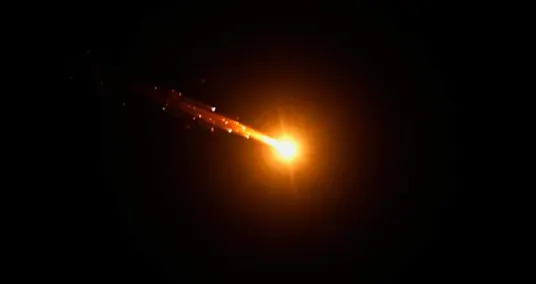
Every December, Earth plows through a dusty lane of debris in space, and the night becomes illuminated by streaks of meteors. This year's Geminids meteor shower peaked around Dec. 13, with generally favorable viewing thanks to a relatively dim moon.
The beauty of the Geminids was captured by astrophotographers worldwide, including well-known astrophotographer Josh Dury.
What is it?
A meteor isn't a "falling star" but instead a piece of space grit, usually no bigger than a grain of sand, hitting the Earth's atmosphere at tens of miles per second and vaporizing in a bright, brief flare.
The point from which the Geminids appear to originate (also called the radiant) sits in the constellation Gemini, near the bright star Castor, which is why the meteor shower is named the Geminids.
Where is it?
This image was taken near the Yucatán Peninsula in Mexico.

Why is it amazing?
According to Dury's instagram post on this image: "The Geminids are strange; unlike most meteor showers, they are not debris from a comet, but rather - an asteroid." The asteroid in question is 3200 Phaethon, which is known to act more like a comet than an asteroid.
"This narrative of asteroid fragments raining down conjured the image for me of the extinction of the dinosaurs when the Chicxulub asteroid impacted with the Earth," Dury told Space.com. "Utilizing this year's meteor shower over the fossilized dinosaur tracks, I was able to reconstruct the morbid scene that might well have been the final scene before life on earth changed as we know it."
Want to learn more?
You can learn more about meteor showers and astrophotography.
LATEST POSTS
- 1
 Holiday spots Well known With Americans In 2024
- 26 Nations for Setting up camp
- 3Danish warship sunk by famed British admiral discovered after 225 years
- 4Weight-loss pill approval set to accelerate food industry product overhauls
- 5Rick Steves Doesn't Want You Overlooking This Food Spot While In France




- Earth’s magnetic field protects life on Earth from radiation, but it can move, and the magnetic poles can even flip
- 9 Under-The-Radar Malaysian Islands To Consider Instead Of Thailand Or Indonesia
- Doggie diversity in size and shape began at least 11,000 years ago
- Meet the Artemis crew in NASA's first astronaut mission to the moon in more than a half-century
- WATCH: IDF strikes, dismantles missile launchers in southern Lebanon
- Israel launches new wave of attacks against Hezbollah in Beirut
- Israel, Gulf states report fresh missile and drone attacks
- Baikonur launch pad damaged after Russian Soyuz launch to International Space Station
- Clovis Unified students spend spring break traveling through China