Marine scientists in Germany are increasingly worried about a whale that managed to free itself from a sandbank, only to run aground again in shallow waters, as local experts say the mammal's prospects of survival are now worsening.
The humpback whale's condition has deteriorated significantly in the past 24 hours, Burkard Baschek, director of the German Oceanographic Museum, said at a press conference in the coastal city of Wismar on Sunday.
The whale drew widespread media attention after it went aground on a sandbank off Germany's Timmendorfer Strand resort near the city of Lübeck early on Monday. It managed to swim itself free on Thursday, only to get stuck again nearby in water about two metres deep.
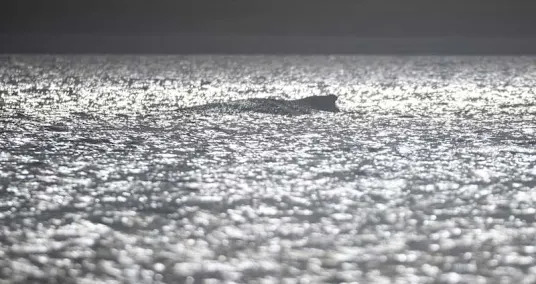
On Sunday it could be seen lying there apparently motionless, only occasionally spouting a jet of water into the air.
The 12 to 15-metre animal is now thought to be extremely weak, and Till Backhaus, environment minister in the coastal state of Mecklenburg-Vorpommern, said the aim is to leave the whale in peace in the hope that it would regain its strength, free itself and find its way to deeper waters.
Whale's calls growing less frequent
"It's doing badly," the minister said, noting that the whale's calls have become less frequent since Saturday. Authorities have set up a restricted zone within a 500-metre radius around the animal, he said, and no ship or boat is allowed to enter.
Baschek said that because the whale was in shallow water, it was no longer stranded, but "resting on the seabed." It could currently free itself but was not attempting to do so, Baschek said.
The whale should have enough food to survive, said Stephanie Gross from the Institute for Terrestrial and Aquatic Wildlife Research at the University of Veterinary Medicine Hannover, explaining that humpback whales can go without food for weeks.
However, experts are instead worried about the receding water level. Prospects for the whale could deteriorate further as the water level drops by about 40 centimetres by Monday night. "If the whale does not get free under its own power in the next few hours, the overall situation will initially get worse for it," Baschek said.
Asked whether humpback whales might come to the coast to die, Gross said there was no scientific evidence for that. "Otherwise we would see significantly more humpback whale strandings worldwide if all old, sick and weakened humpback whales came into shallow-water areas."
Caught in net - a global problem for marine mammals
On Monday morning last week, the marine mammal was discovered on a sandbank off Timmendorfer Strand near Lübeck. A major rescue operation began, leading to the humpback whale freeing itself through a channel dug out by an excavator.
The whale has been spotted repeatedly along the Baltic Sea coast since early March and was believed to have become tangled up in a net.
Greenpeace marine biologist Thilo Maack said fishing was a global problem for marine mammals. Estimates suggest around 300,000 whales and dolphins die in nets every year.
Helpers have been able to remove part of the net from the animal in recent days. But according to Gross, part of it is still hanging in its mouth and could not be pulled out.

LATEST POSTS
- 1
 The Most Notable Design Brands of the 21st Hundred years
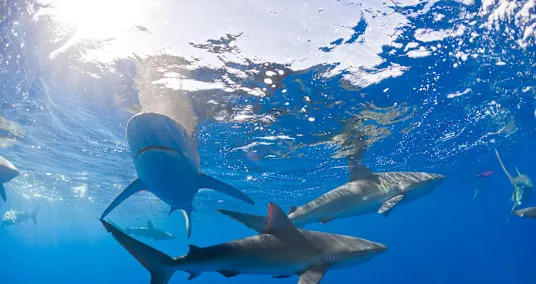
 - 2Cocaine, caffeine, painkillers consumed by sharks in Bahamas, study finds
- 3Many European nations want Israel to cancel 19 new settlement plans
- 4Simple Consideration Plants for Home and Office: An Aide
- 5Exclusive new photos from 'Michael' biopic show Jaafar Jackson as King of Pop




- Moon milestones: A rundown of Artemis 2's many spaceflight firsts
- Employers and staff feel effect of fuel price rise
- Los Angeles County sees significant uptick in norovirus cases, officials say
- Honda’s Biggest Flex Isn’t Its Superbikes, It’s Selling 500K Bikes In One Month
- Germany's far-right AfD tops poll ahead of Merz's conservatives
- Italian police hold suspected boss of Naples Mafia's Mazzarella Clan
- Minneapolis ICE shooting: Woman dies after federal agent opens fire on her vehicle amid immigration crackdown
- German finance minister seeks better market access in China talks
- Saudi Arabia says it intercepted 7 missiles, debris falls near energy facilities